
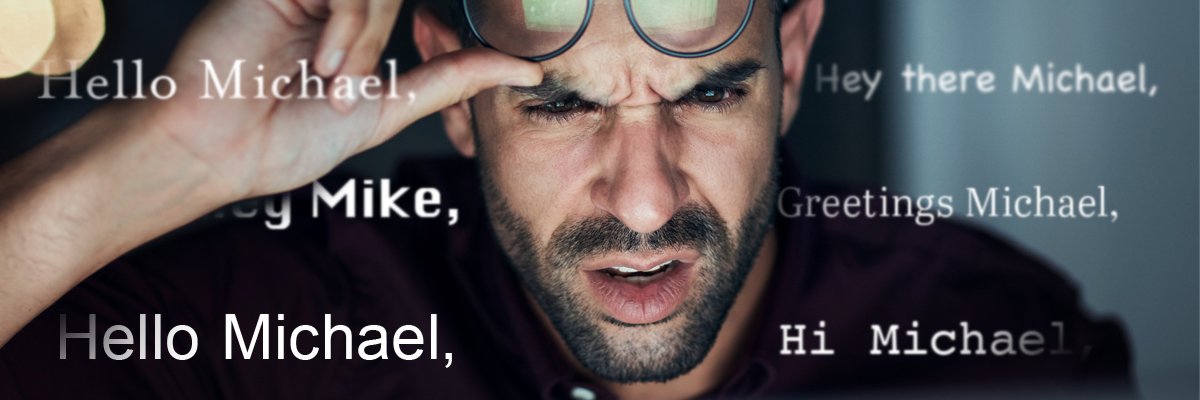
Most of the time, when an agency talks about personalization in their fundraising appeals, it means they added the donor’s first name in a couple of places.
Hi {First Name}.
Thanks, {First Name}.
Can you make a gift today, {First Name}?
That’s not personalization.
Real personalization isn’t about proving you know a donor’s name. It’s about demonstrating that you understand why they support your organization in the first place.
And that’s where many fundraising programs fall short.
Most organizations have more donor data than ever before. They know who gives monthly, who responds to direct mail, who attends events, who makes major gifts, and who hasn’t opened an email in six months. Yet despite all that information, many donors still receive virtually the same message.
In many cases, organizations know far more about their donors than they realize. They know where donors live, how long they’ve been on the file, how often they give, their average gift, what campaigns they’ve responded to, and which channels they prefer.
Some organizations know issue interests, event attendance, volunteer history, military service, membership status, age range, and even personal details that supporters have willingly shared over the years. The challenge isn’t a lack of information. The challenge is using that information to create more relevant conversations.
Too often, all of that data sits in a database while every donor receives essentially the same message. The result is communications that feel generic, even when the organization has the insights needed to make them feel personal.
The most effective fundraising programs don’t simply ask, “Who is this donor?” They ask, “What does this donor care about, and how should that change the conversation?”
The answer doesn’t always require sophisticated automation or artificial intelligence. Sometimes it means something much simpler: recognizing that different donors need different messages.
A monthly donor should be thanked differently than a first-time donor. A major donor should receive a different level of insight and engagement than someone who made a small online gift. Someone who hasn’t given in two years should be approached differently than someone who gave last week.
That isn’t personalization because you’re inserting data points into communication. It’s personalization because you’re treating donors like individuals instead of records in a database.
Donors notice the difference.